How to Start Retinol Without Irritating Your Skin
Retinol transforms skin — but only when introduced correctly. Here's the patient, rewarding approach.
Retinol is one of the most evidence-backed ingredients in skincare. Decades of clinical research confirm its ability to accelerate cell turnover, stimulate collagen production, fade hyperpigmentation, and smooth fine lines. It's also one of the most commonly abandoned ingredients — because when introduced too quickly, it causes the redness, peeling, and sensitivity that gave it a difficult reputation. Here's how to get the results without the setback.
Why Retinol Irritates and How to Avoid It
Retinol increases the rate at which your skin cells turn over. For skin that isn't accustomed to this acceleration, the first few weeks can produce dryness, flaking, and redness — sometimes called the "retinol purge," though the purging concept is debated. The irritation isn't inevitable. It's almost always a sign that the introduction was too fast.
The most common mistake: starting at a high concentration, using it every night from week one. Even 0.1% retinol used nightly before the skin has adapted will cause irritation in most users. The solution is a slower, more patient protocol.
“Retinol rewards patience. The people who see the best results are the ones who took the longest to get there.”
The Slow Introduction Protocol
Week 1–2: Apply retinol once a week, on one of the drier nights (avoid using it after exfoliation or actives that day). Use a pea-sized amount for the entire face. Start at the lowest available concentration: 0.025% or 0.05%.
Week 3–4: Move to twice a week if no significant irritation occurred. Notice how your skin responds during the day-after observation window.
Month 2: Three times a week if the previous frequency was tolerated. Month 3 and beyond: increase toward alternate nights. Full nightly use, if appropriate for your skin, typically comes after three to four months of gradual introduction.
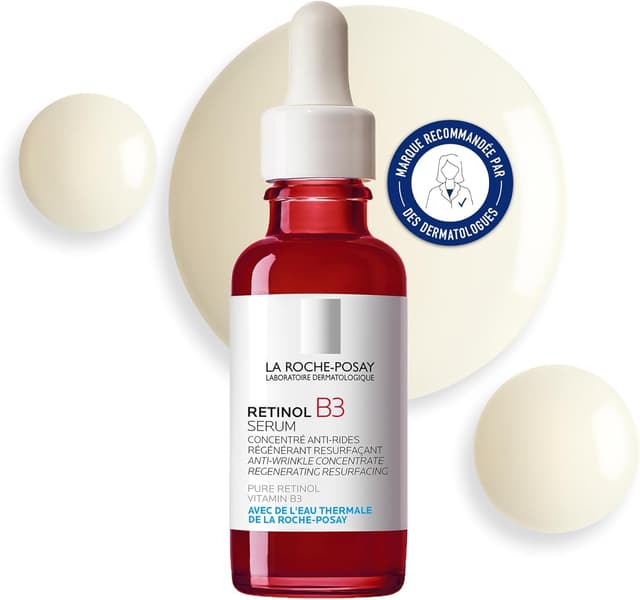
La Roche-Posay Retinol B3 Serum
Pure retinol progressively released with niacinamide: smooths wrinkles and evens tone without irritating, even on sensitive skin.
The "Sandwich" Technique
For the first few months, sandwich your retinol between moisturizer layers: apply your regular moisturizer, let it absorb for two minutes, apply retinol, let it absorb for two minutes, apply moisturizer again. This dilutes the retinol slightly and provides a buffer that significantly reduces irritation without meaningfully reducing efficacy.
Avoid using retinol with vitamin C, AHAs, BHAs, or benzoyl peroxide until your skin has adapted (typically 2–3 months in). These combinations work eventually, but the early phase of retinol introduction isn't the moment to add complexity.