Smoky Eye for Beginners: One Technique, Endless Variations
The smoky eye is intimidating until you understand the single principle behind every great one.
The smoky eye has a reputation for being difficult — and that reputation is mostly based on watching it go wrong. Too harsh, too sharp, too heavy. But a smoky eye, properly understood, is one of the most forgiving eye looks there is. It's built on blending, and blending doesn't require precision. It requires patience.
The Principle Behind Every Great Smoky Eye
A smoky eye is shadow gradation: dark at the lash line, medium in the crease, lighter toward the brow bone. The dark color intensifies close to the eye and diffuses outward. That's the whole concept. Every variation — champagne and charcoal, burgundy and nude, classic black — follows the same structure.
The mistake most beginners make is placing too much product before building up. Smoky eyes are built in layers: a small amount of dark shadow placed and blended, then more added and blended again. You're never applying the final intensity in one pass.
“The smoky eye isn't hard. It's just rushed. Give it twenty minutes the first time you try it.”
The Step-by-Step Method
Start with a nude or skin-toned eyeshadow primer on the entire lid. This creates a base, increases pigment intensity, and — crucially — makes blending far easier. Without primer, shadows move less predictably and grab unevenly.
Apply a medium-depth matte shadow (taupe, brown, or soft grey) to the entire crease and blend in windshield-wiper motions. This is your transition shade — it softens the edges of everything darker.
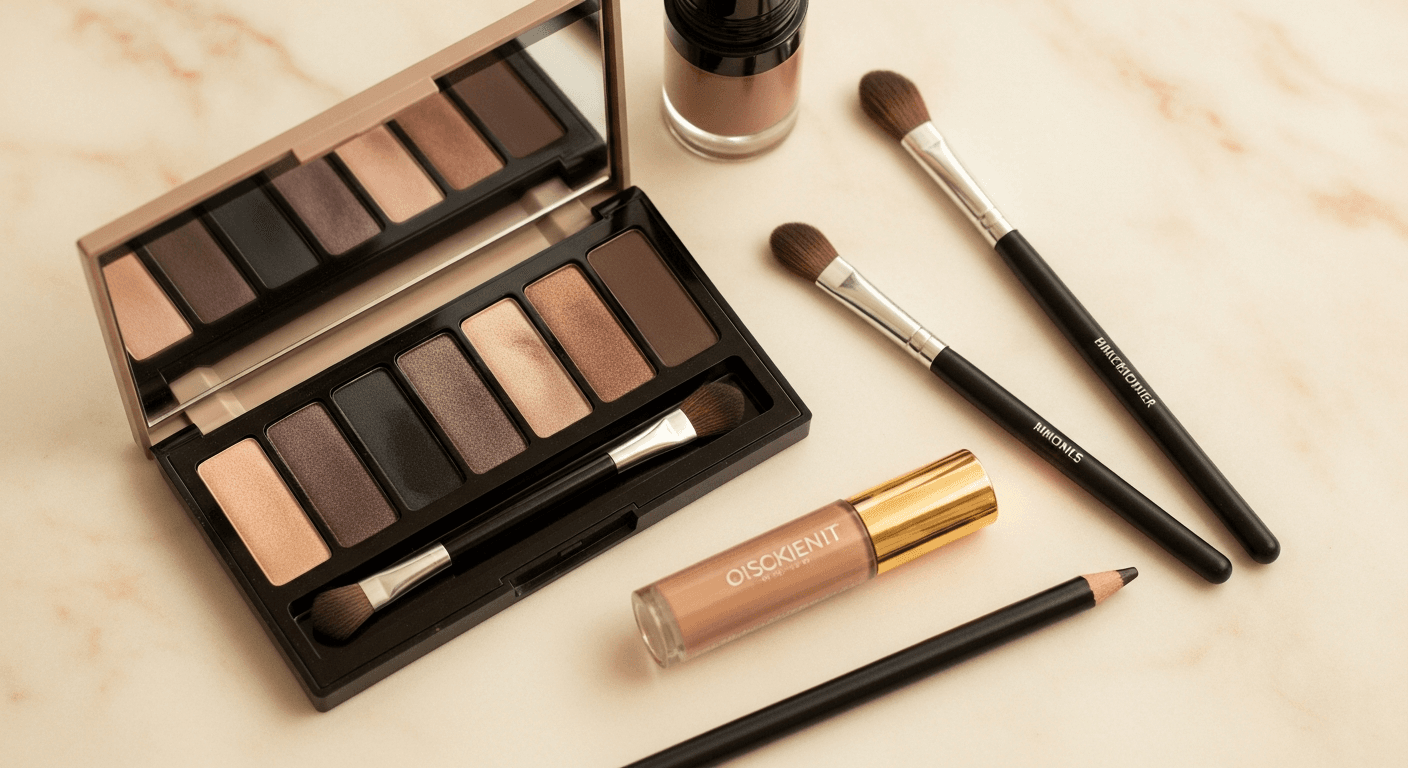
Next, apply your dark shadow (charcoal, deep brown, or black) to the outer corner and along the upper lash line using a small flat brush. Blend immediately, using the same windshield-wiper motion in the crease. Step back and assess. Add more dark shadow in small increments, blending each addition before adding the next.

Maybelline The Nudes — 12 shades
12 nude shades for everyday wear: matte, satin, glossy. The versatile beginner palette — from casual nude to soft smoky.
The Finishing Steps That Matter
Line the waterline with a black kohl pencil for intensity — this is often what separates a daytime smoky eye from an evening one. Tight-line the upper waterline with a dark shadow or liner for added depth without visible liner. Apply a highlighter or pale shimmer shadow on the inner corner and brow bone to open the eye. Curl lashes, apply one or two coats of volumizing mascara.
The most important thing: blend more than you think you need to. Then blend again.